Although it might not replace you car navigation (unless you can get a BT/wired GPS receiver working) it still can act as a local pmp, picture frame and couch surfing device
If for some reason you have something against the Apple operating system on the Apple iPad, you mant want to take a look at the Android and Windows 7 offerings on the tablet category. Ownta’s Jumper JK01-TT, for example, is a full computer with a 10.1-inch touchscreen, WiFi, 3G and G-sensor. It seems to work well the complimentary wireless keyboard or with finger taps. The $671 price seems reasonable enough considering this one already comes with 3G, though 1.2 kg weight (due to the SATA hard drive) may not be.
Jumper JK01-TT Tablet with WiFi and 3G Specification:
LCD 10.1 inch multi-Touch Screen, support CRT display, LED
CPU Intel Atom N450+NM10 processor, 667MHz FBS, NM10 chipset
Graphics GMA950 integrated graphics
Audio card ALC662 chip, Realtek high defintion audio, earphone/microphone jack
Memory NAYA 2GB DDRII 800 memory onboard
Harddisk 250GB Samsung SATA harddisk
Camera Built in, 2.0MP
Wireless 802.11B/G wireless network card
WiFi Yes
3G Yes
Interface 3 x USB2.0
1 x 4 in 1 card reader (SD/MMC/MS)
1 x HDMI-VGA
1 x Earphone/microphone
1 x DC power jack
Power adapter AC110-240V, DC19V==2.1A, with 3000mAh li-ion battery
OS Windows 7 operation system
Dimension 290x150x20 mm (device); 44x7x25 cm (package)
It has been published in at many websites but I like the ZDNet one most so here it is
It looks like Microsoft has finally figured out how to turn its table-sized multi-touch Surface computer into a more portable experience.
Microsoft is planning to demonstrate this week at its employee-only Microsoft Research showcase in Redmond a project it is calling the “Mobile Surface.” (Microsoft is briefing a few select press on some of its TechFest projects before the event begins. I wasn’t briefed; I just found the link for this while trolling around on the Microsoft Research site.)
From a description of the Mobile Surface on the company’s Microsoft Research (MSR) Web site:
“Our goal is to bring Microsoft Surface experience to mobile scenarios, and more importantly, to enable 3D interaction with mobile devices. We do research on how to transform any surface (e.g., a coffee table or a piece of paper) to Mobile Surface with a mobile device and a camera-projector system. Besides this, our work also includes how to get 3D object model in real-time, augmented reality and multiple-layer 3D information presentation.”
Microsoft has been working on a variety of Surface-like projects, including the rumored “Oahu” multi-touch table (which would be smaller and cheaper than the Surface) and the Courier book-style tablet. Courier is thought to be in the incubation phase at this point, although the final product may look little like the screen shots and video images that leaked last fall. Last I heard, Courier is unlikely to debut in commercial form until 2011 at the earliest.
Natural user interface (NUI) technology, in general,is going to be a big emphasis at TechFest, based on some of the early information coming from Microsoft’s briefings.
One project I haven’t yet seen mentioned (but which I found on Microsoft’s Research site as one of its TechFest 2010 demos) marries NUIs, tablets and touch. That effort, known as “Project Gustav,” is an “immersive digital painting” research project, as Microsoft’s Web site describes it. More on Gustav from the Microsoft site:
“The natural interface makes Project Gustav ideal for hobbyists and professional artists alike. Project Gustav achieves a high level of interactivity and realism by leveraging the computing power of modern GPUs, taking full advantage of multitouch and tablet input technology and our novel, natural media-modeling and brush-simulation algorithms.”
Update: I thought the whole Mobile Surface concept sounded kind of familiar. It probably has its roots in the Microsoft Research “PlayAnywhere” project on which developers have been working since some time before 2007. (PlayTable, which is related to PlayAnywhere, evolved to become Microsoft’s Surface.)
Not sure how they perform and how the quality is but this is an architecs wet dream but also for me as a designer it can be a great thing to use uin a building. Specially when they are so thin and flexible you can yse them as part of a projection screen. No hassle anymore for the centerspeaker:) Bit thanks again to inAVate for bringing this
Invisible speakers brought a step closer: Architects rejoice!
23 February 2010
Researchers over at the Fraunhofer Institute for Manufacturing, Engineering and Automation (IPA) in Germany have prototyped a new loudspeaker made using carbon nanotubes (CNTs). The concept was demonstrated last week at the Nano Tech 2010 show in Tokyo, Japan. Using CNTs, a simple and slim loudspeaker can be made without the need for components such as magnets and piezoelectric devices, enabling speakers to be placed in a variety of different locations.
Images from TechOn
The demonstration model measured 8cm x 6cm and was made simply by applying a conductive coating onto a PET (Polyethylene terephthalate) film, which contained CNTs. When a 12V direct voltage is applied to it, and the current is switched on and off rapidly, it generates an audio signal corresponding to the frequency of the switching.
“The principle of the sound generation is based on the thermoacoustic effect,” said a Fraunhofer IPA spokesperson. “The CNTs generate heat and expand when the current is on, and they cool down and shrink when the current is off.”
It is this expansion and contraction of the film that moves the air molecules and creates the resulting sound. The demo model is said to have a frequency response of 200Hz – 20kHz, so not really a sub woofer (yet).
Close-up of the panel
The major benefit of the speaker is its extraordinary thinness. The demonstrated device was only 200 microns thick (about twice as thick as a human hair).This allows to be mounted on a number of flat surfaces such as wallpaper or advertising boards.
However researchers at the institute have also speculated that if fewer nanotubes could used in the film, it would be possible to make it completely transparent. Maybe the invisible loudspeaker is possible after
After digging some on the net since I found some rumour I came accross the perfect cross over as they would say in car terms. An ereader and tablet, open source, many apps potentially and smart thinking. Thanks to Art of Business I found the video and some more info. mostr specs are on the ADAM notion ink website and hope it makes its way accross the ocean to Europe fast. It has all the iPad has and all it should have like HDMI, flash etc
This is video of the Notion Ink Adam by Technoholik (ET Now) from the Times of India website here timesofindia.indiatimes.com The main Notion Ink website is notionink.in And the Pixel Qi website is here www.pixelqi.com Also the Wikipedia article is here secure.wikimedia.org The Notion Ink device is due in late June 2010. 1) Pixel Qi screen: 160 hours of battery life in B/W mode. 2) Expansion slots: USB, HDMI and SD card slot. 3) 3.2 MP Swivel Auto Focus Camera. 4) Flash Acceleration 5) Multitouch 6) 3G/Wifi/Bluetooth – AGPS Will run Android/ Ubuntu / Chrome
Still thinking about the joojoo tablet but this might be an alternative for a low power solution for mediacenter on my HD tv. Although I have an HD decoder with pvr and a BR player and TV with DLNA functionality I still miss the ease of tuse of MS Mediacenter. So for watching tv and recording I have to take the poor quality cable receiver with pvr but for anything else (watch my homevideos, pictures and listening to my music) I like to use mediacenter again.
When the JooJoo tablet comes available this might be a great solution however the machine below (thanks to slashgear) might be an option as well
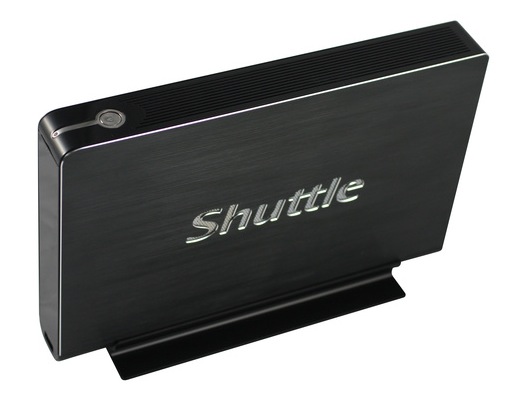
Shuttle is well known for making small form factor computers for use in the home or office. The tiny systems can be used for all manner of things from gaming to HTPC rigs taking up little space. Shuttle has announced its latest SFF PC called the XS35 that will be seen at CeBIT next month.
The tiny SFF PC is only 3.3cm thick and is HD compatible. This may well be the best SFF PC Shuttle has for use as an HTPC machine in the living room. The chassis used for the XS35 is 1-liter class and has a standard VESA mount interface. That interface means you can mount the PC to the rear of a TV or LCD display.
The machine is complete, runs the Intel Atom D510 processor at 1.6GHz, and uses the NM10 Express Chipset. Graphics are handled by the NVIDIA GT218, otherwise known as the ION 2 platform. The machine has HDMI out, five USB ports, VGA out, LAN port, memory card reader, 2.5″ HDD, and an optical drive. The machine will be available in Q2 2010 at an undisclosed price.
I have a windows phone and no iPhone (and I'm happy with it:)). However there are a lot of wine apps for the iPhone but nut that much for windows mobile. What would you recommend as the best WM wine application and what tool are you using for managing your wine cellar. Have around 300 bottles in the cellar (see list below with the amount and the community score (CT)). Currently I'm using cellartracker and ooking forward to the new user interface that goes live tonight. However any other suggestion is welcom.
Also feel free to comment on the content of my cellar and do any suggestions for missing wines
New Zealand N.V. No. 1 Family Estate Cuvée No. 1 (New Zealand, South Island, Marlborough) 3, CT88,6
Dry Wines Rosé Germany
Pfalz, Rosé Blend 2007 Michel Schneider (Germany, Pfalz) 1
South Africa Coastal Region, Rosé Blend 2006 Welmoed (South Africa, Coastal Region, Stellenbosch) 1
White
Argentina Mendoza, Chardonnay 2007 Pulenta Estate Chardonnay VIII (Argentina, Mendoza) 6
Chile Central Valley, Sauvignon Blanc 2009 Rosario Sauvignon Blanc (Chile, Central Valley, Maipo Valley) 4
France Alsace, Gewürztraminer 2007 Joseph & Jean-Marie Voelker Gewürztraminer Alsace AOC Vieilles Vignes (France, Alsace, Orschwiller, Alsace AOC) 1 2007 Roland Schmitt Gewurztraminer Altenberg de Bergbieten Sélection de Grains Nobles (France, Alsace, Alsace AOC) - 500ml 1 2006 Schaller Gewurztraminer Cuvée Pauline (France, Alsace, Beblenheim, Alsace Grand Cru AOC) 1 2007 Theo Cattin et fils Gewürztraminer Alsace AOC Vieilles Vignes (France, Alsace, Alsace AOC) 1
Alsace, Muscat 2007 Joseph & Jean-Marie Voelker Muscat Alsace AOC (France, Alsace, Orschwiller, Alsace AOC) 4 2006 Schaller Muscat Cuvée Charles (France, Alsace, Beblenheim, Alsace Grand Cru AOC) 2
Alsace, Pinot Gris 2007 Albert Boxler Pinot Gris Brand (France, Alsace, Turckheim, Alsace Grand Cru AOC) 2, CT93 2007 Joseph & Jean-Marie Voelker Pinot Gris Alsace AOC (France, Alsace, Orschwiller, Alsace AOC) 4 2008 Joseph & Jean-Marie Voelker Pinot Gris Alsace AOC Bollenberg (France, Alsace, Orschwiller, Alsace AOC) 6 2007 Joseph & Jean-Marie Voelker Pinot Gris Alsace AOC Grain Noble (France, Alsace, Orschwiller, Alsace AOC) 1 2006 Paul Ginglinger Pinot Gris Eichberg (France, Alsace, Alsace Grand Cru AOC) 2 2005 Pierre Arnold Pinot Gris Frankstein (France, Alsace, Dambach-la-Ville, Alsace Grand Cru AOC) 3 2006 Pierre Henri Ginglinger Pinot Gris Pfersigberg Grand Cru (France, Alsace, Eguisheim, Alsace AOC) 1 2008 Pierre Henri Ginglinger Pinot Gris Pfersigberg Grand Cru (France, Alsace, Eguisheim, Alsace AOC) 3 2008 Roland Schmitt Pinot Gris (France, Alsace, Alsace AOC) 2 2005 Bernard Schwach Tokay Pinot Gris Domaine du Moulin de Dusenbach Grand Cru Altenberg de Bergbieten (France, Alsace, Alsace AOC) 1
Alsace, Riesling 2007 Albert Boxler Riesling (France, Alsace, Alsace AOC) 2 2007 Paul Ginglinger Riesling Cuvée Drei Exa (France, Alsace, Alsace AOC) 2 2006 Pierre Arnold Riesling Frankstein (France, Alsace, Dambach-la-Ville, Alsace Grand Cru AOC) 3 2003 Pierre Henri Ginglinger Riesling Grand Cru Eichberg (France, Alsace, Eguisheim, Alsace AOC) 4 2008 Roland Schmitt Riesling Thalberg (France, Alsace, Alsace AOC) 2 2007 Theo Cattin et fils Riesling Alsace AOC Cuvée de l'OURS NOIR (France, Alsace, Alsace AOC) 3 2007 Theo Cattin et fils Riesling Alsace AOC Eichberg Grand Cru Eichberg (France, Alsace, Alsace AOC) 4
Alsace, Silvaner 2008 Roland Schmitt Sylvaner Grand A du Petit Léon (France, Alsace, Alsace AOC) 2, CT78
Bordeaux 2008 Château Bel-Air Blanc Sec (France, Bordeaux, Entre-Deux-Mers, Sainte Croix du Mont) 6
Loire Valley 2003 Château du Nozet (Ladoucette) Grand Millésime (France, Loire Valley) 4 2007 Fouassier Père et Fils Menetou-Salon (France, Loire Valley, Upper Loire, Menetou-Salon) 3 2007 Didier Dagueneau Blanc Fumé de Pouilly (France, Loire Valley, Upper Loire, Pouilly-Fumé) 2, CT90,7 2007 Didier Dagueneau Pouilly-Fumé Pur Sang (France, Loire Valley, Upper Loire, Pouilly-Fumé) 2, CT93 2006 Fouassier Père et Fils Pouilly-Fumé Cuvée Jules (France, Loire Valley, Upper Loire, Pouilly-Fumé) 1 2007 Fouassier Père et Fils Pouilly-Fumé Cuvée Jules (France, Loire Valley, Upper Loire, Pouilly-Fumé) 1 2007 Fouassier Père et Fils Pouilly-Fumé Domaine des cassiers (France, Loire Valley, Upper Loire, Pouilly-Fumé) 3 2005 Château du Nozet Pouilly-Fumé Baron de L (France, Loire Valley, Upper Loire, Pouilly-Fumé) 4 2006 Château du Nozet Pouilly-Fumé La Doucette (France, Loire Valley, Upper Loire, Pouilly-Fumé) 4, CT91 2007 Château de Tracy Pouilly-Fumé (France, Loire Valley, Upper Loire, Pouilly-Fumé) 3 2008 Château de Tracy Pouilly-Fumé Mademoiselle de T (France, Loire Valley, Upper Loire, Pouilly-Fumé) 4, CT90 2008 Henri Bourgeois Quincy Haute Victoire (France, Loire Valley, Upper Loire, Quincy) 2 2008 Domaine Fouassier Quincy (France, Loire Valley, Upper Loire, Quincy) 1 2008 Henri Bourgeois Sancerre Les Baronnes (France, Loire Valley, Upper Loire, Sancerre) 3, CT86,5 2006 Domaine Vincent Delaporte Sancerre Cuvée Maxime (France, Loire Valley, Upper Loire, Sancerre) 1 2007 Domaine Vincent Delaporte Sancerre Cuvée Maxime (France, Loire Valley, Upper Loire, Sancerre) 3 2007 Dominique Roger (Domaine du Carrou) Sancerre (France, Loire Valley, Upper Loire, Sancerre) 1, CT87 2007 Paul Prieur & Fils Sancerre Verdigny (France, Loire Valley, Upper Loire, Sancerre) 1
Spain Castilla y León 2009 Bodegas Don Diego Verdejo Rueda Tramoya A (Spain, Castilla y León, Rueda) 4
Catalunya 2004 Josep Maria Raventós i Blanc Penedès Perfum De Vi Blanc (Spain, Catalunya, Penedès) 1
USA California, Chardonnay 2007 Bernardus Winery Chardonnay (USA, California, Central Coast, Monterey County) 1, CT87,6
California, Sauvignon Blanc 2007 Bernardus Winery Sauvignon Blanc Monterey (USA, California, Central Coast, Monterey) 1, CT90,6
Red
Argentina Mendoza, Malbec 2002 San Carlos Sud - Relincho Malbec (Argentina, Mendoza) 1 2007 Pascual Toso Malbec Reserve Las Barrancas Vineyards (Argentina, Mendoza) 6, CT87,6
Chile Central Valley, Cabernet Sauvignon 2007 De Martino Cabernet Sauvignon 347 Vineyards (Chile, Central Valley, Maule Valley, Valle del Maule) 1, CT86,5
Central Valley, Carménère 2006 De Martino Carménère Single Vineyard (Chile, Central Valley, Maipo Valley) 4, CT87,5 2007 De Martino Carménère Single Vineyard (Chile, Central Valley, Maipo Valley) 6 2005 Laura Hartwig Carménère Reserva Colchagua Valley (Chile, Central Valley, Rapel Valley, Colchagua Valley) 1
Central Valley, Merlot 2005 Cumbres Andinas Merlot (Chile, Central Valley, Rapel Valley, Cachapoal Valley) 1
France Bordeaux 2003 Château Latour Camblanes (France, Bordeaux, Entre-Deux-Mers, Premières Côtes de Bordeaux) 1 1996 L'Esprit de Chevalier (France, Bordeaux, Graves, Pessac-Léognan) 1 2005 Château Haut-Goujon (France, Bordeaux, Libournais, Lalande de Pomerol) 3, CT89 1995 Château Saint-Denis Bel Air (France, Bordeaux, Libournais, Lalande de Pomerol) 1 2006 Château Chatain (France, Bordeaux, Libournais, Montagne-St. Émilion) 12 2002 Château Beard (France, Bordeaux, Libournais, St. Émilion Grand Cru) 1 1994 Clos Castelot (France, Bordeaux, Libournais, St. Émilion Grand Cru) 1 2002 decamps et fils Petit-Mangot (France, Bordeaux, Libournais, St. Émilion Grand Cru) 1 2005 Devillaire, Chateau [Chateau Devillaire] Grand Cru Controlée (France, Bordeaux, Libournais, St. Émilion Grand Cru) 6 1999 Château Franc La Rose (France, Bordeaux, Libournais, St. Émilion Grand Cru) 1 1996 Château Guillemin la Gaffelière (France, Bordeaux, Libournais, St. Émilion Grand Cru) 1 2003 Château Haut-Sarpe (France, Bordeaux, Libournais, St. Émilion Grand Cru) 1 2001 Château La Croix Bonnelle (France, Bordeaux, Libournais, St. Émilion Grand Cru) 1 2004 Château La Grace Dieu des Prieurs (France, Bordeaux, Libournais, St. Émilion Grand Cru) 1 2004 Pontet-Teyssier (France, Bordeaux, Libournais, St. Émilion Grand Cru) 1 1999 Trocard Chateau Franc La Rose (France, Bordeaux, Libournais, St. Émilion Grand Cru) 1 2002 Château Belgrave (France, Bordeaux, Médoc, Haut-Médoc) 1, CT80 2005 Le Cloître du Chateau Prieuré Lichine (France, Bordeaux, Médoc, Margaux) 1 2000 Château Livran (France, Bordeaux, Médoc) 1, CT83 1995 Château Moulin de Cassy (France, Bordeaux, Médoc) 1 1999 Château Potensac (France, Bordeaux, Médoc) 1, CT85,3 1993 Château La Fleur Peyrabon (France, Bordeaux, Médoc, Pauillac) 1 2007 Château Bel-Air Pradey (France, Bordeaux, Bordeaux Contrôlée) 6 2002 Château de Seguin Cuvée Prestige (France, Bordeaux, Bordeaux Supérieur) 1, CT82
New Zealand North Island, Syrah 2005 Mills Reef Syrah Reserve (New Zealand, North Island, Hawkes Bay) 1
South Island, Pinot Noir 2007 Auntsfield Pinot Noir Hawk Hill (New Zealand, South Island, Marlborough) 1, CT89
Portugal Alentejano 1998 Herdade do Esporão Reguengos Esporão Reserva (Portugal, Alentejano, Alentejo, Reguengos) 1
South Africa Coastal Region, Pinotage Blend 2006 Kanonkop Estate Kadette (South Africa, Coastal Region, Stellenbosch) 1, CT86
Western Cape, Pinotage 2007 Robertson Winery Pinotage Phanto Ridge (South Africa, Western Cape) 2
Spain Castilla-La Mancha 2005 Bodegas Martúe La Guardia Martúe (Spain, Castilla-La Mancha, Vino de la Tierra de Castilla) 1
Valencia 1999 Salvador Poveda Alicante Casa Safra Gran Reserva (Spain, Valencia, Alicante) 3, CT90
Sweet/Dessert Wines
White France Languedoc Roussillon N.V. Domaine d'Arain Muscat de Frontignan (France, Languedoc Roussillon, Languedoc, Muscat de Frontignan) 1
Southwest France 2003 Tour Belingard Monbazillac (France, Southwest France, Dordogne, Monbazillac) 1
Red
France Languedoc Roussillon 2004 si Banyuls (France, Languedoc Roussillon, Roussillon, Banyuls) 1
Fortified Wines
White France Rhône 2008 Domaine de La Pigeade Muscat de Beaumes-de-Venise (France, Rhône, Southern Rhône, Muscat de Beaumes-de-Venise) 2 2005 Vignerons de Beaumes-de-Venise Muscat de Beaumes-de-Venise Carte d'Or (France, Rhône, Southern Rhône, Muscat de Beaumes-de-Venise) 1
Just read a great post on Engadget. This might help turning windows in car's, houses etc into screens so augmented reallity is another step closer to our daily live
AIST shows off see-through display prototype on video
By Darren Murph posted Feb 25th 2010 8:38PM
Face it, folks -- the days of windows being just windows are behind us. Before long, our panes will double as widget displays or makeshift televisions, and AIST has the prototype to prove it. The demonstration seems to utilize technology that's far different than that seen in Samsung's iceTouch PMP, but it's certainly no less exciting. According to DigInfo, AIST is developing florescent glass suitable for excitation by near-UV LEDs, and by combining this [borosilicate] glass with LEDs, it's possible to obtain transparent, flat light sources." Better still, we're told that the prevailing thought is that this here technology could be used to develop see-through displays as well as "light sources and displays that use solar cells without modification." Anxious to see what a transparent LCD could do for you? Hop on past the break, mash play and let your imagination run absolutely wild.
Some Dutch from Delft did a great job in creating the universal inbox. Not just all mail but also all social stuff in one mailbox with enough filters to avoid infobesitas and help you mage it all. And the great thing is the premium version they are working on where this will be there also on a mobile and web client and all in sync:). Lifehacking already created a great article on this, shown below
Windows: Like its original webapp, the Inbox2 beta for Windows does a great job of combining your email, Twitter, Facebook, and other social messages into one sortable stream. It also respects your email labels and stars and adds simple task management tools.
To Inbox2's credit, setup is very, very simple. Enter in a few usernames and passwords, hit the authentication buttons, and everything starts streaming in. The benefit to a tool like Inbox2 is that you can take all your communication and process it the way you would email, so Inbox2 has three buttons—Todo, Waiting For, and Someday—that help manage your communiques and seem a lot like, well, the Trusted Trio.
Inbox2 also aggregates contacts across all your chosen accounts, which is convenient for reaching out to that person you know you know, somehow, but don't have time to hunt down. At first, Inbox2 only grabs the last 50 messages from each of your accounts, but a quick trip to the Options and you can download everything you've got, making the attachment and image aggregation tabs far more useful, and something like a social-media-aware Postbox.
Inbox2 is a free download for Windows systems only, but Mac and Linux users feeling left out can stick to the webapp or Facebook application, launched from the same site.
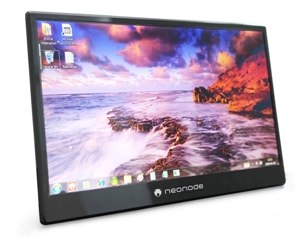
Neonode may not have made the splash they hoped for with their cellphone range, but they seem to be on something of a roll with their touchscreen platform. Only a few weeks after the launch of their zBook budget ebook touchscreen range, the company have announced the zForce Pad platform, a range of low-cost widescreen touchscreen panels spanning 5- to 13-inches and intended for MID, tablet and other ultraportable devices.
While they’re obviously not the only company pushing a touchscreen system, Neonode reckon zForce Pad has a few key advantages over rival resistive and capacitive panels. For a start, zForce Pad has no overlay and so doesn’t occlude whatever display panel is being used; it’s also thinner and apparently cheaper to implement. There’s an integrated ambient light sensor and of course multitouch gesture support.
The company claim several Asian manufacturers are already developing products based on the zForce Pad system, though unsurprisingly they’re not mentioning any names. There’s also no timescale for their release.
Press Release:
Neonode Launches zForce Pad – A Touchscreen Platform for Mobile Internet and Computer Devices
STOCKHOLM–(BUSINESS WIRE)–Neonode, Inc. (OTCBB:NEON), the Swedish Optical Touchscreen Technology Company, today announced the launch of zForce Pad, a new low cost 5 to 13 inch widescreen touch screen reference design for mobile internet and computer devices. zForce Pad is the latest in a series of new innovative products based on the Neonode’s patented touchscreen technology, zForce. The new platform joins the Company’s powerful line-up of reference designs that provide fast and economical integration of the Neonode touch screen technology into e-book readers, digital picture frames, mobile internet devices and mobile phones.
Neonode’s latest reference design, zForce Pad, is aimed squarely at companies who develop and sell touch screen based mobile internet and computer devices such as tablet-PCs and iPad-like products. zForce Pad offers a number of advantages compared to existing technologies: 100% transparency (no overlay needed like in resistive or capacitive), low cost for complete touch screen solution, ultrathin design, outstanding finger touch experiences (multi-touch support for gesture like pinch to zoom), integrated ambient light sensor for self adjusting backlight levels and lower power consumption and much more. Products based on the zForce Pad touch screen reference design are already being developed by Asian companies.
“The market for this type of product is booming and the touch screen solution is destined to be a vital part of the success of this market. We developed the zForce Pad platform together with companies in the mobile internet and tablet PC device industry and we are confident that it will play an important role in the development of the market. The feed-back from the companies we presented zForce Pad to at the recently completed 3GSM World Mobile Congress in Barcelona, Spain, was very encouraging,” said Thomas Eriksson, CEO of Neonode Technologies AB.
Neonode offers touch solutions that are many times more cost effective than any other high performance touch solutions in the market today. zForce incorporates all functionality and performance features from traditional touch solutions like resistive and capacitive. zForce supports high resolution pen input, multi-finger touch, gestures like zooming combined with superior picture quality. zForce is currently being integrated into products such as mobile phones, mobile internet devices, e-books, digital picture frames and tablet PC’s.
According to the website they claim (and have to admit, it looks like a proper claim) The marriage of precision engineering and quality design.
A good Multi-touch table can only become great when it comfortably seats the users. With this thought in mind, the touchy remix was developed in collaboration with guest-designer Janis Ponisch... Based on the revolutionary design of the "VERSA" form-factor, which dramatically changes the appearance and functionallity of the multi-touch table device. The "Touchy remix" breaks away from the boxy solutions of previous multi-touch tables to deliver a quality piece of sustainable design.
The only thing is the low resolution and it's running on the apple platform. Not sure if you can use the apps store for the iphone but it might be a limitation to the amount of ready available applications.
But it sure is a cool thing................and Dutch:)
2 x 1920 x 1080 pixels stored as individual files in RAW sequences. DNG format Weight: 2,8 kg incl. memory cartridge and battery.
Distance between optical axis: 91,5 mm Colour depth: 12 bit Mount: IMS,PL or C FPS: 25 or 30 Built on order. Price TBD
Although the price is still TBD I read somewhere on the net they aim for a max pricetag of 10k. Still way more xpensive than your small HD cam but hey..........after investing in a 3D screen this is the thing you need to blow everybody away with your latest home videos
Portuguese company is hoping to transform our landscape and environment into one big touchscreen if they have their way, with a new technology debuting in Amsterdam.
Called projective capacitive touchscreen technology, the tech has the ability to turn virtually any surface into a touchscreen device for users to interact with.
"Our technology only captures touch, you can use it anywhere", Miguel Fonseca, chief business officer tells Pocket-lint in a one-to-one interview.
The technology is actually a thinner-than-paper polymer film that when applied to glass, plastic or wood turns the surface interactive.
The film, which features a grid of nanowires embedded into it, is able to monitor when and where it is touched and relay those co-ordinates to a controller, which in turn is read by software - making the user believe they have interacted with the specific point in question on the screen.
"You touch, it measures the disturbance, it will see where you are touching", comments Fonseca, explaining how the technology works.
The film can actually measure lots of disturbances it turns out, with current support for 16-finger multitouch on a 50-inch screen and future support up to 65 fingers at any one time coming in future developments. Furthermore the film can also measure airflow.
"Users could blow on the screen to interact with the interface", says Fonseca before going on to give an example. "Chances are when you use a tablet PC you'll have it on your lap or near your face. You could blow on it to close the monitor, or blow out a candle in a game".
Asked why regular wind wouldn't be an issue, Fonseca tells us that it's all about energy, something that wind doesn't have in this application and therefore not making it an issue.
"We measure the energy displacement on the glass".
Where it gets even more complicated is that users don't even have to touch the film for the technology to work. In fact the film can be on the other side of any surface as long as that surface isn't thicker than 15mm.
"You can turn a table into a multitouch table", boasts Fonseca. "Or the inside of a shop window".
It's where the technology gets its name, working like an iPhone for example, the capacitive screen projects through the material turning the surface into what appears to be a touchscreen surface for you to interact with.
"All of a sudden, everything could become touch enabled", Fonseca tells us.
The film, which is currently available in sizes from 7 inches (18cm) diagonal to a whopping 3m in diagonal, means information points, shop windows, and of course tablet computers like the newly announced Apple iPad are all ripe for the touching.
Although a variant of the technology has been around since 2006 and already used by companies such as Vodafone in the UK and even Cirque Du Soleil, it is the first time the company has moved to support multitouch technology rather than single finger input.
The previous version of the technology only supported single finger input
Like Synaptics, who offers a 10-finger multitouch screen up to 11 inches, games and education are at the forefront of the thinking as to where the technology will and can be used.
Hoping to offer more than the Synaptic's offering, the Displax screen can be placed over curved surfaces, suggesting touchscreen globes with a Google earth software interface underneath could be making their way to a museum or classroom near you in the not too distant future.
"We expect it [the technology] to be in the high street by the end of the year", says Fonseca confidently when asked how "pie in the sky" this technology currently is.
While the main push is to be museums, high street stores and possibly military HQs, Fonseca is clearly excited by Internet tablet PCs suddenly hitting the scene. They are already working with a number of manufacturers to bring this technology to market.
Who? Fonseca won't say, however we did get a chuckle from him when we mentioned mobile phone maker HTC, suggesting the manufacturer famed with the creation of some of the best Android handsets on the market, is working on a tablet device. The rumours and denials are already there in equal measure, however on the record, Fonseca can only say that they are working with "very intelligent manufacturers".
An other great inAVate story. For the original link please click here
Intel wowed CES visitors when its president and CEO, Paul Otellini unveiled an impressive digital signage concept during his keynote speech. The nearly eight foot holographic glass window - with LCD display - utilises Intel Core processors to provide customers with targeted content and encourage them to interact with retailers and friends via a multi-touch, multi-user interface.
Paul Otellini, president and CEO of Intel unveils a new signage concept during his keynote at the Consumer Electronics Shows in Las Vegas
The computing and communications giant said its prototype device could change the way people interact with digital signage technology in environments such as retail, airports, banks and hotels.
Otellini unveiled the concept against the backdrop of a virtual brick-and-mortar shop setting. He showed how customers would use the multi-touch holographic screen to explore merchandise, find out about promotions, submit feedback on products, read customer reviews, view purchasing histories and share discoveries with friends via social media and mobile phone integration.
Multiple customers can use the window simultaneously to explore augmented reality-enabled maps of each floor of a shop. Retailers can superimpose images such as coupons and sales promotions next to the product visualisations on the glass.
“As stores seek more competitive advantages over online retailers, digital signage has become a valuable technology for dispersing targeted and interactive content to shoppers,” said Joe Jensen, general manager of the Intel Embedded Computing Division. “We therefore designed the Intel Intelligent Digital Signage Concept to show that retailers can engage and interact with consumers in a more personal and compelling manner through new usage models such as augmented reality and interactive product explorations, which in turn could yield an increase in revenue and customer loyalty.”
Advertisers are set to benefit from the use of anonymous video analytics. As a viewer looks at the system screen, the built in camera technology analyses data such as gender and age, audience composition, time-of-day and other criteria, which enable the system to display tailored content and graphics based on estimated demographics. The system anonymously sends audience information to advertisers who can use that information to understand the type of content and messages that are most popular with viewers.
Intel also announced a strategic relationship with Microsoft to develop an open-standards validated platform for digital signage applications.
“With the Windows Embedded and Intel platform, we will provide industries such as the digital signage market with scalable and interoperable solutions that enable applications with rich graphics and interactive capabilities,” said Kevin Dallas, general manager, Windows Embedded business Unit Microsoft. “With this solution we look forward to delivering endless possibilities to the digital signage industry and beyond.”
with thanks to InAVate a repost of their article. click here for original
12 January 2010
Amongst all the fuss about 3DTV and Slate PCs at CES, another potentially game changing technology was also on display. Intel has announced what it’s calling WiDi (literally wireless display), a technology enabling your computer wirelessly connect to a display via HDMI. The really clever part is that it requires no additional hardware at the PC end as it’s built into Intel’s newest Core i5 and Core i3 mobile processors.
No you’ve no doubt seen InAVate cover wireless HD video applications before, but this one doesn’t involve as much external hardware.
The system takes advantage of WiFi via 802.11n as a data carrier. Intel’s own words on how it works are as follows:
Intel Wireless Display requires a laptop PC based on select 2010 Intel Core processors, Intel HD Graphics, and Intel Centrino wireless with Intel MyWiFi Technology enabled. In addition, the laptop needs to have Intel Wireless Display preinstalled. Finally, an adapter featuring Intel Wireless Display is required to receive the signals from the PC and display them on the TV. This adapter is connected to the TV via either HDMI (preferred) or standard AV cables.
Now, the sharp-minded of you will realise that the current crop of new digital signage players is running Intel’s Atom processors, designed for net books and the like. It’s not a great leap to consider than in 2 years time we might see i3 or i5 chips, or something similar in digital signage players, or indeed in a future generation of tablet PCs.
Boardroom AV just got a little less wired. One thing I can’t determine is if it carries audio signals too – something which is catered for by HDMI. The other caveat is that the moment it doesn’t support HDCP. However, the concept is good. Check out Intel’s video here
Dan is Book a Desk iets voor u! Book a Desk is een platform voor het matchen van organisaties met beschikbare werkplekken door geheel Nederland, met flexwerkers, zelfstandigen en buitendienstmedewerkers. Verdien geld met uw capaciteit en word onderdeel van een nieuw en innovatief fysiek en virtueel businessnetwerk!
WAT KAN BOOKADESK U OPLEVEREN?
U heeft geen omkijken naar de verhuur van de ruimte die u over heeft.
U maakt uw vrije werkplekken rendabel.
Er wordt bij de verhuur gematcht op kennisbehoefte, zodat uw locatie een ontmoetingsplaats wordt voor interessante mensen.
U kunt gebruik maken van de innovatie & co-creatie capaciteit van deze ontmoetingsplaats.
U kunt gebruik maken van de veilige infrastructuur die Bookadesk inricht.
Uit de reuring op uw locatie, komt potentieel nieuwe business voor uw organisatie voort.
MAATSCHAPPELIJK ONDERNEMEN BENEFITS
Door als locatie aan Bookadesk deel te nemen, levert u direct of indirect een bijdrage een de volgende maatschappelijke speerpunten:
Minder (lease) auto’s op de weg en minder files
Bijdrage aan de CO2 doelstelling
Bijdrage aan het mobiliteitsvraagstuk
Deelnemen aan de kenniseconomie
KOSTEN EN BATEN
Vanaf 60% van de totale opbrengst per daadwerkelijk gebruik van de werkplek
Pay per use voor additionele faciliteiten (ruimtes huren, secretariaat)
Ben Loos is the owner of MII (www.mii.nu). MII is an independent consulting firm focussing on the integration of IT and AV. We can help you with a coordinated and integrated ICT/AV vision and strategy to lower your management/operational costs, increase availability and enable new communication technologies
http://www.linkedin.com/in/benloos
Best Phone Plans 33
-
*Verizon Shared Data 5 GB:* Verizon’s Shared Data 5 GB plan starts at $65
and gives you 5 GB of high-speed data and unlimited data at slower speeds.
You...






 Posts
Posts


 View Ben Loos's profile
